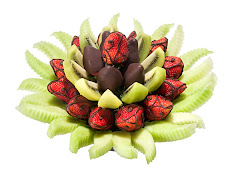
If you have been a fan of our website, our You Tube videos, or our facebook page, you know that Flowers to Eat offers comprehensive classes for budding entrepreneurs who want to start their own independent fruit arrangement business
As the summer winds down, we are offering a super savings on our 3 and 4 day classes.
If you register for either our 3 day or our 4 day class by August 31, 2011 and take the class by October 31, 2011, we will deduct $500.00 from the cost of the class.
Contact Nancy or Ruth at 814-341-2328 for more information, or send a note to info@flowerstoeat for all the details.
Wednesday, August 10, 2011

Tuesday, August 2, 2011
Selling Food Items from your Home OK'd in Florida
Have you ever thought about starting your own food based business from your home?
When you looked into it, did you discover that you needed to use a commercial kitchen and be licensed?
Well, this has all changed, and budding entrepreneurs can now get their business started in their home.
On July 2, 2011, the Florida Cottage Food Act became a state law. This new law allows small businesses to prepare their food products in their own kitchens without obtaining a food permit from the Department of Agriculture.
The law allows cooks to bake cakes, cookies, or breads, create jams, jellies and vinegars, and a number of other products in their own home and market them.
There are a number of conditions that you need to be aware of, however.
1) Annual gross sales cannot exceed $15,000.
2) The products cannot be sold over the Internet or by mail order
3) The products cannot be sold wholesale to restaurants or food stores.
For more information, contact your local Small Business Information Center. They are running workshops to help budding entrepreneurs understand this new law and its caveats. In Hillsborough County, you can learn more by logging onto www.hillsborough-county.org/sbic or call 813-914-4028.
Basic information for this blog obtained from the In The Field Magazine, July 2011
When you looked into it, did you discover that you needed to use a commercial kitchen and be licensed?
Well, this has all changed, and budding entrepreneurs can now get their business started in their home.
On July 2, 2011, the Florida Cottage Food Act became a state law. This new law allows small businesses to prepare their food products in their own kitchens without obtaining a food permit from the Department of Agriculture.
The law allows cooks to bake cakes, cookies, or breads, create jams, jellies and vinegars, and a number of other products in their own home and market them.
There are a number of conditions that you need to be aware of, however.
1) Annual gross sales cannot exceed $15,000.
2) The products cannot be sold over the Internet or by mail order
3) The products cannot be sold wholesale to restaurants or food stores.
For more information, contact your local Small Business Information Center. They are running workshops to help budding entrepreneurs understand this new law and its caveats. In Hillsborough County, you can learn more by logging onto www.hillsborough-county.org/sbic or call 813-914-4028.
Basic information for this blog obtained from the In The Field Magazine, July 2011
Tuesday, June 28, 2011
Set off the Fireworks!!!!

Let's celebrate the independence of the U.S. this weekend with a Stars 'n' Stripes bouquet from Flowers to Eat or your favorite arrangement in one of our Stars and Stripes vases.
We can also create custom berries dipped in white, milk, or dark chocolate and rolled in red, white, and blue sprinkles or laced with red, white and blue chocolate swizzles. They are a great addition to any 4th of July picnic or party.
Tuesday, June 21, 2011
Flowers to Eat's latest video
Here are some of our most popular arrangements, set to music!
Copy and paste this url into your browser to see the video with all the text included:
http://youtu.be/q1Z3dB4NlRs
or
click here to view the bouquets.
Copy and paste this url into your browser to see the video with all the text included:
http://youtu.be/q1Z3dB4NlRs
or
click here to view the bouquets.
Tuesday, May 24, 2011
Thimbleberries and Cloudberries by Nancy Schramm
Here in Tampa, we have had a beautiful spring. However, all good things must come to an end, at least that's what the saying claims. As May winds down, summer weather is already upon us. This means that local strawberries are pretty much a fond memory. Local blueberries are still available and there are nearby U-Pick blueberry farms in our area. Sweet blueberries are so good by themselves and they add a delicious shot of anti-oxidants to pancakes, waffles, smoothies, and salads.
While strawberries and blueberries may be the best known members of the berry family, and the ones that Flowers to Eat most often incorporates into our bouquets, trays and arrangements, there are many other types of berries available. Of course, there are the other readily available in grocery stores berries: raspberries, blackberries, and cranberries. But have you tried Cloudberries, Thimbleberries or Loganberries?
If you have visited the upper pennisula of Michigan, you may have tried Thimbleberry jam. Because they are very delicate and do not pack well, they are seldom sold commercially other than in the local areas in which they are grown.
Cloudberries grow wild across most of Alaska, Canada, and some of the northern-most continental United States. It is a botanical vestige of the Ice Ages and is under legal protection in parts of Germany. High in Vitamin C, the ripe fruits are golden-yellow, soft and juicy. They are made into a special beer in Canada. Wikipedia states that they are made into 'Eskimo Ice-Cream' in Alaska by mixing them with seal oil or reindeer or caribou fat. Hmm, I wonder if Ben and Jerrys has heard of this flavor?
Anyway, as summer approaches throughout the United States, we hope you will experiment with at least one berry or fruit that is new to you. Happy Exploring!
While strawberries and blueberries may be the best known members of the berry family, and the ones that Flowers to Eat most often incorporates into our bouquets, trays and arrangements, there are many other types of berries available. Of course, there are the other readily available in grocery stores berries: raspberries, blackberries, and cranberries. But have you tried Cloudberries, Thimbleberries or Loganberries?
If you have visited the upper pennisula of Michigan, you may have tried Thimbleberry jam. Because they are very delicate and do not pack well, they are seldom sold commercially other than in the local areas in which they are grown.
Cloudberries grow wild across most of Alaska, Canada, and some of the northern-most continental United States. It is a botanical vestige of the Ice Ages and is under legal protection in parts of Germany. High in Vitamin C, the ripe fruits are golden-yellow, soft and juicy. They are made into a special beer in Canada. Wikipedia states that they are made into 'Eskimo Ice-Cream' in Alaska by mixing them with seal oil or reindeer or caribou fat. Hmm, I wonder if Ben and Jerrys has heard of this flavor?
Anyway, as summer approaches throughout the United States, we hope you will experiment with at least one berry or fruit that is new to you. Happy Exploring!
Wednesday, April 13, 2011
The Most Fragrant Necklace

My last blog entry talked about my recent trip to Hawaii, and the traditional Kalua Pork that we ate while there. There is even a delicious 3 ingredient recipe for Kalua Pork that received rave reviews at my house. If you have tried it, I hope you liked it as much as we did.
Ever since our first trip to Hawaii, I have loved the fragrance of Plumeria flowers. Whether they are pink, yellow or white, most of them smell absolutely wonderful. To me, their fragrance will always remind me of the islands and the first lei that my husband bought for me on our honeymoon.
On our way to our first Luau, Dan bought a beautiful lei made up of 35 – 50 white and yellow plumaria blossoms. The fragrance was heavenly, and I loved having it around my neck……..for the first hour or two.
The perfume of large number of plumaria flowers can actually be overpowering. I found the best way to resolve the super strong fragrance, and still let Dan know how much I liked his present. This was by taking the lei off from around my neck and wrapping it several times around my wrist. Now I could enjoy the fragrance, it wasn’t too strong but just right, and I was still wearing this lovely gift.
It wasn’t until a later island visit that I learned how to extend the life of any plumeria or orchid lei. I was told to spray it lightly with cool water, put it in a plastic bag, leaving the bag slightly open at one end. The directions then instructed me to wrap a towel around the plastic bag and place the whole thing in a cooler or refrigerator. By following these directions, I was able to wear my subsequent leis several more times. In fact, they lasted about a week, with the orchid leis sometimes lasting even longer than that.
Coming back to my home in Tampa, I brought several cuttings of Plumeria, or as they are called back here on the Mainland, frangi-pangi. They were really easy to root and several of them have grown to be large trees with a trunk circumference of 8 – 10 inches. They really do not like the frost, however, and even though I live in central Florida, I need to be protect them during the winter.
So far, I haven’t had enough blossoms all at one time to make my own lei, but I do cut the flowers and bring them into the house to enjoy that wonderful natural Hawaiian perfume.
Monday, April 4, 2011
One Yummy Pig

I know that we usually talk about fruit or vegetables on this blog, but earlier this month, my husband and I celebrated our 20th wedding anniversary by taking a trip to Hawaii. This actually wasn’t our first trip there. Our previous visits included our honeymoon and a trip for one of our sons who was married there.
However, we had not gone to a Luau since our honeymoon, and we thought it would be fun to do again.
My memory of the first Luau dinner was lots of fresh fruit, delicious tropical drinks, very good Kalua pork, and purplish wallpaper paste, or as they billed it, poi. I apologize to all the poi lovers out there, my palate just is not refined enough to recognize the subtle nuances of taste and flavor in the poi that I have had.
This year’s Luau was very similar. The food was delicious; the entertainment was a combination of my husband being part of the onstage hula lessons and a very good ‘history of the Hawaiian people’s arrival to the islands’ with wonderful Hawaiian music.
The focal point of the dinner was the roasted pig, ceremoniously unearthed from his underground oven or Imu, and carried to the carving table. It was delicious, tender, moist and flavorful. My husband loves this ‘other white meat’.
When we returned to the Mainland, I decided to try my hand at cooking Kalua Pork…..but without the underground cooking. On the web, I found an excellent recipe that had only 3 ingredients (including the pig) and lots of rave reviews. I did have to purchase Hawaiian Salt, all the reviewers who used either sea salt or regular salt said the meat was too salty. Hawaiian Salt actually includes some clay with the salt (there’s my piece of earth in the recipe).
I tried the recipe last week and it was delicious, just as good as that which we enjoyed at the Luau. So, for all of you who want to try a bit of Hawaiian pork at your home, without digging up your backyard, here are the directions I followed:
1 6 lb. pork butt
1 to 1/12 Tbs. Hawaiian Salt
1 Tbs. liquid smoke
Pierce the pork butt all over with a knife or fork
Rub the Hawaiian Salt and liquid smoke into the meat
Place meat in your slow cooker set to low heat
Allow to cook on low for 16 – 20 hours
Remove from cooker, shred the pork and serve with rolls, if desired.
Monday, March 21, 2011
Kiwifruit update
Way back in December, 2009, I wrote a blog entry about the health benefits of the fruit of the kiwi.
Not only are they cute (in a fuzzy kind of way), really attractive in a bouquet (the bright green, white and black make them an outstanding component of a fruit arrangement), and delicious, but we are now learning about additional health benefits.
According to a recent study, done by researchers at South Korea's Seoul National University, kiwi could play a roll in helping some of the 300 million people worldwide who suffer from asthma.
The March Dole Nutrition News described the study, saying that researchers administered kiwifruit extract to mice which were later exposed to allergens, then monitored for roughly three weeks. Compared to a control (placebo) group, the kiwi-fed mice enjoyed a 47% decline in asthmatic symptoms – plus a 48% reduction in white blood cell counts (which marshal in excess among asthmatic and allergy patients). Kiwi’s powerful enzyme – actinidin – may play a role.
If you haven't yet subscribed to the Dole Nutrition News,
http://www.dole.com/NutritionInstituteLanding/NutritionNews/tabid/1060/Default.aspx,
you may want to check out their website. The monthly newsletter is always full of interesting facts, stories and new research on fruit and nutrition.
In the meantime, keep enjoying those cute, fuzzy green kiwifruits!
Not only are they cute (in a fuzzy kind of way), really attractive in a bouquet (the bright green, white and black make them an outstanding component of a fruit arrangement), and delicious, but we are now learning about additional health benefits.
According to a recent study, done by researchers at South Korea's Seoul National University, kiwi could play a roll in helping some of the 300 million people worldwide who suffer from asthma.
The March Dole Nutrition News described the study, saying that researchers administered kiwifruit extract to mice which were later exposed to allergens, then monitored for roughly three weeks. Compared to a control (placebo) group, the kiwi-fed mice enjoyed a 47% decline in asthmatic symptoms – plus a 48% reduction in white blood cell counts (which marshal in excess among asthmatic and allergy patients). Kiwi’s powerful enzyme – actinidin – may play a role.
If you haven't yet subscribed to the Dole Nutrition News,
http://www.dole.com/NutritionInstituteLanding/NutritionNews/tabid/1060/Default.aspx,
you may want to check out their website. The monthly newsletter is always full of interesting facts, stories and new research on fruit and nutrition.
In the meantime, keep enjoying those cute, fuzzy green kiwifruits!
Thursday, March 3, 2011
Tropical Flowers and Fresh Fruit Bouquets
What is the most common characteristic of tropical flowers?
Is it their heady fragrance, maybe their prolific nature? I think it is their vibrant colors.
Whether you are looking at a beautiful yellow, orange or red hibiscus or marveling at the outstanding colors of the paper thin bracts of a bougainvillea, there is no doubt that you are looking at a tropical plant. Did you think those beautiful ‘blossoms’ on the bougainvillea were it’s flowers? Actually, the flower is the little white tubular blossom in the center of the colorful bracts. They are small, but big enough for hummingbirds and other pollinators to find them.
Following the lead of tropical flowers, today’s fruit bouquets and arrangements are also composed of colorful flowers made from bright yellow pineapples, vibrant pink watermelon, orange cantaloupes, and the green honeydew. Then when you add purple grapes, bright orange citrus, green and black kiwifruit, bright red strawberries, and blueberries, you have a tropical bouquet that is also edible!
Keeping with the tropical theme, Flowers to Eat has added some vibrant new arrangements to their product line. Take a moment and look at the new Sensational Starburst, packed with color, flavor and creativity! Let us know what you think of this and our other new designs.
Is it their heady fragrance, maybe their prolific nature? I think it is their vibrant colors.
Whether you are looking at a beautiful yellow, orange or red hibiscus or marveling at the outstanding colors of the paper thin bracts of a bougainvillea, there is no doubt that you are looking at a tropical plant. Did you think those beautiful ‘blossoms’ on the bougainvillea were it’s flowers? Actually, the flower is the little white tubular blossom in the center of the colorful bracts. They are small, but big enough for hummingbirds and other pollinators to find them.
Following the lead of tropical flowers, today’s fruit bouquets and arrangements are also composed of colorful flowers made from bright yellow pineapples, vibrant pink watermelon, orange cantaloupes, and the green honeydew. Then when you add purple grapes, bright orange citrus, green and black kiwifruit, bright red strawberries, and blueberries, you have a tropical bouquet that is also edible!
Keeping with the tropical theme, Flowers to Eat has added some vibrant new arrangements to their product line. Take a moment and look at the new Sensational Starburst, packed with color, flavor and creativity! Let us know what you think of this and our other new designs.
Thursday, February 17, 2011
IT's Strawberry Season in Florida!
Wow, Valentine's Day has come and gone, and we want to thank all our customers and clients for their orders.
The strawberries were super sweet and large. The gourmet chocolate was smooth and delicious.
We are now entering the best season for Florida strawberries. (There's a reason why the Florida Strawberry Festival is held the first week of March!). The berries will be prolific and very tasty.
Whether you like strawberry shortcake, strawberry smoothies, or strawberry cheesecakes, the freshest, most delicious and healthy berries are readily available! Enjoy!
The strawberries were super sweet and large. The gourmet chocolate was smooth and delicious.
We are now entering the best season for Florida strawberries. (There's a reason why the Florida Strawberry Festival is held the first week of March!). The berries will be prolific and very tasty.
Whether you like strawberry shortcake, strawberry smoothies, or strawberry cheesecakes, the freshest, most delicious and healthy berries are readily available! Enjoy!
Subscribe to:
Posts (Atom)